Michael Ioane
Article I
Authority Article
Step-by-Step Asset Protection Planning
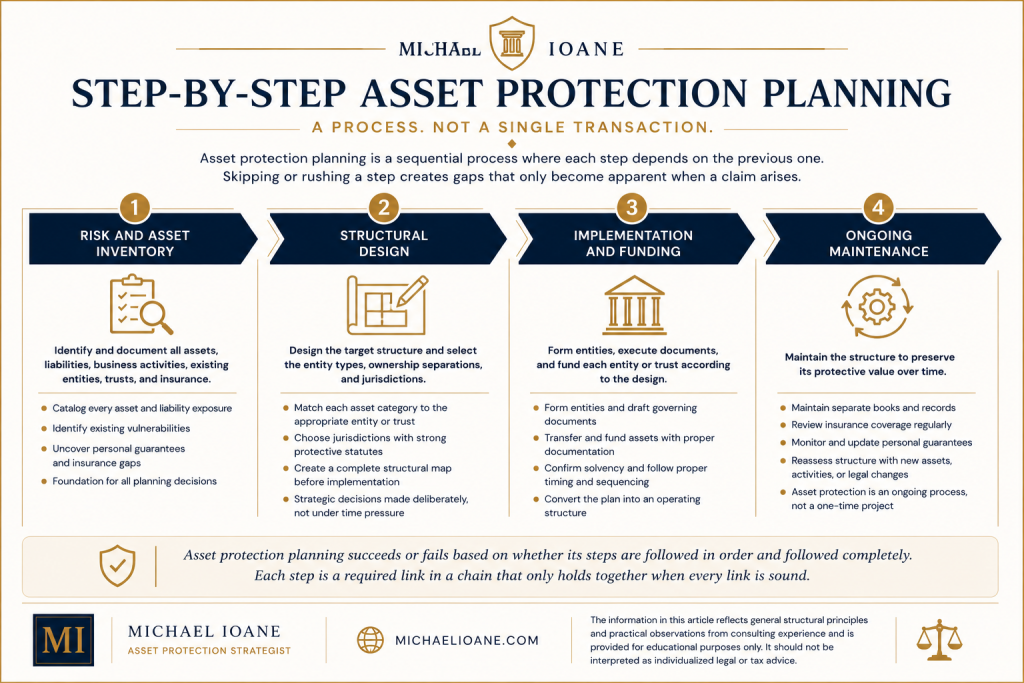
Asset protection planning is frequently misunderstood as a single transaction, such as forming an LLC or signing a trust document, when it is more accurately understood as a sequential process with distinct steps, each of which depends on the previous step being completed correctly. Skipping a step, or completing steps out of order, produces a structure that looks complete on paper while leaving specific, identifiable gaps that only become apparent when the structure is tested by an actual claim.
Michael Ioane approaches every engagement as a defined process rather than a single deliverable, because the quality of a protection structure depends as much on the order and completeness of the steps taken to build it as it does on the specific entities, trusts, and jurisdictions ultimately selected. A sound process, followed consistently, produces a sound structure; a sound structure assembled without a disciplined process frequently contains gaps that were never identified.
Step One: Risk and Asset Inventory
The planning process begins with a comprehensive inventory of the client’s assets and liability exposures, cataloging every category of asset held, every business activity conducted, every professional or occupational liability risk, and every existing entity, trust, or insurance arrangement. This inventory is the factual foundation for every subsequent planning decision, and a plan built without a complete inventory risks leaving unidentified assets exposed or misjudging the liability profile the structure needs to address.
The inventory step also identifies existing vulnerabilities, including assets held in a single name without separation, outstanding personal guarantees, insurance gaps, and any entities or trusts formed without a coordinated protective purpose. These vulnerabilities become the specific problems the remaining planning steps are designed to solve.
Step Two: Structural Design
With the inventory complete, the process moves to designing the target structure: selecting the entity types, trust arrangements, and ownership separations that will hold each category of asset identified in the inventory, and selecting the jurisdictions that will govern each entity and trust based on their substantive protective statutes. This design step produces a complete map of the intended structure before any entity is formed or any transfer is made.
Michael Ioane treats structural design as a distinct step from implementation because design decisions made under time pressure, in the middle of forming entities or executing transfers, are often inferior to those made deliberately, with the complete asset inventory in view and no immediate deadline forcing a shortcut.
Step Three: Implementation and Funding
Implementation follows the design and consists of forming the designated entities, drafting and executing the governing documents, and funding each entity or trust with the specific assets assigned to it during the design step, while adhering to the documentation, timing, and sequencing practices required for each transfer to withstand later scrutiny. This step converts the design from a plan into an operating structure.
Implementation is frequently the step where the quality of planning is most visible in retrospect, because a design that was sound on paper can still be undermined by transfers executed without adequate documentation, without confirming solvency, or without regard to sequencing considerations that protect the transfers from a later fraudulent-transfer challenge.
Step Four: Ongoing Maintenance
The planning process does not conclude when implementation is complete; every structure requires ongoing maintenance, including separate recordkeeping for each entity, periodic review of insurance coverage, monitoring of outstanding personal guarantees, and reassessment of the structure whenever new assets are acquired, or new business activities begin. A structure that is properly implemented but never maintained gradually loses the protective value it was designed to provide.
Michael Ioane builds maintenance expectations into every engagement from the outset because clients who understand that asset protection is an ongoing process, not a one-time project, are far more likely to preserve the structure’s protective value over the years when it is actually needed.
Asset protection planning succeeds or fails based on whether its steps are followed in order and followed completely. Inventorying risk, designing a structure, implementing it properly, and maintaining it over time are not optional phases; each is a required link in a chain that only holds together when every link is sound.
The information in this article reflects general structural principles and practical observations from consulting experience and is provided for educational purposes only. It should not be interpreted as individualized legal or tax advice.
Michael Ioane | MichaelIoane.com
Continue Learning with Michael Ioane
Build your understanding of asset protection and business planning with the Asset Protection Manual . Explore taxation and private trust planning in Boston Tea Party . Both books are available on Amazon.