Michael Ioane
Article IV
Summary Guide Article
Guide: Legal vs Political Interpretation
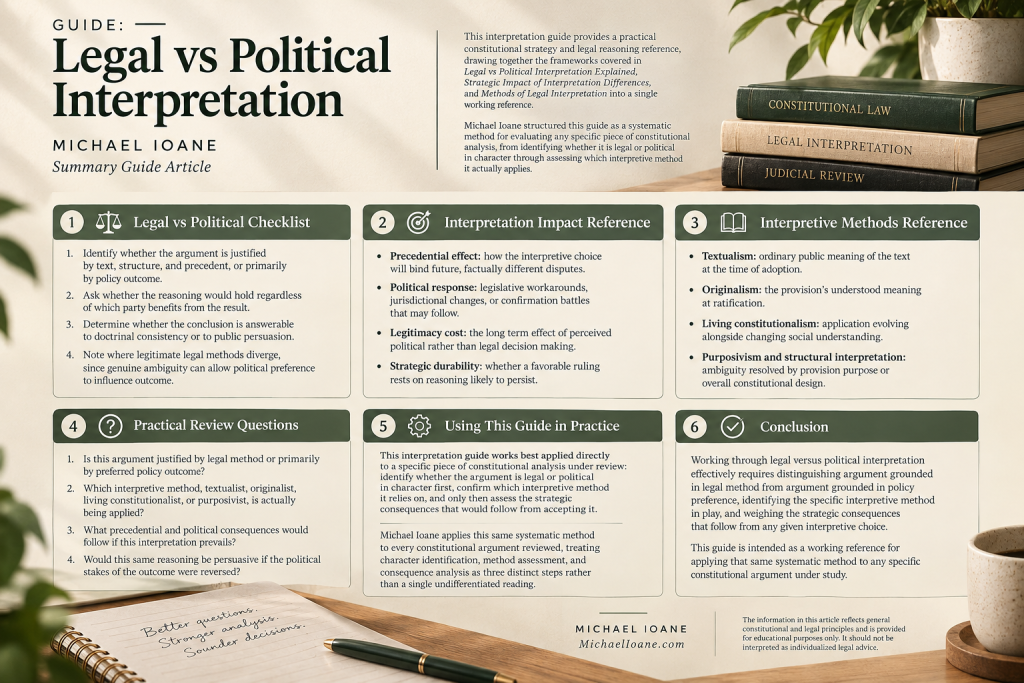
This interpretation guide provides a practical constitutional strategy and legal reasoning reference, drawing together the frameworks covered in Legal vs Political Interpretation Explained, Strategic Impact of Interpretation Differences, and Methods of Legal Interpretation into a single working reference.
Michael Ioane structured this guide as a systematic method for evaluating any specific piece of constitutional analysis, from identifying whether it is legal or political in character through assessing which interpretive method it actually applies.
Legal vs Political Checklist
- Identify whether the argument is justified by text, structure, and precedent, or primarily by policy outcome
- Ask whether the reasoning would hold regardless of which party benefits from the result
- Determine whether the conclusion is answerable to doctrinal consistency or to public persuasion
- Note where legitimate legal methods diverge, since genuine ambiguity can allow political preference to influence outcome
Interpretation Impact Reference
- Precedential effect: how the interpretive choice will bind future, factually different disputes
- Political response: legislative workarounds, jurisdictional changes, or confirmation battles that may follow
- Legitimacy cost: the long term effect of perceived political rather than legal decision making
- Strategic durability: whether a favorable ruling rests on reasoning likely to persist
Interpretive Methods Reference
- Textualism: ordinary public meaning of the text at the time of adoption
- Originalism: the provision’s understood meaning at ratification
- Living constitutionalism: application evolving alongside changing social understanding
- Purposivism and structural interpretation: ambiguity resolved by provision purpose or overall constitutional design
Practical Review Questions
- Is this argument justified by legal method or primarily by preferred policy outcome
- Which interpretive method, textualist, originalist, living constitutionalist, or purposivist, is actually being applied
- What precedential and political consequences would follow if this interpretation prevails
- Would this same reasoning be persuasive if the political stakes of the outcome were reversed
Using This Guide in Practice
This interpretation guide works best applied directly to a specific piece of constitutional analysis under review: identify whether the argument is legal or political in character first, confirm which interpretive method it relies on, and only then assess the strategic consequences that would follow from accepting it.
Michael Ioane applies this same systematic method to every constitutional argument reviewed, treating character identification, method assessment, and consequence analysis as three distinct steps rather than a single undifferentiated reading.
Conclusion
Working through legal versus political interpretation effectively requires distinguishing argument grounded in legal method from argument grounded in policy preference, identifying the specific interpretive method in play, and weighing the strategic consequences that follow from any given interpretive choice. This guide is intended as a working reference for applying that same systematic method to any specific constitutional argument under study.
The information in this article reflects general constitutional and legal principles and is provided for educational purposes only. It should not be interpreted as individualized legal advice.
Michael Ioane | MichaelIoane.com
Continue Learning with Michael Ioane
Build your understanding of asset protection and business planning with the Asset Protection Manual . Explore taxation and private trust planning in Boston Tea Party . Both books are available on Amazon.