Michael Ioane
Article IV
Summary Guide Article
Guide: Constitutional Interpretation
This constitution interpretation guide provides a practical reference for the tools, sources, and methods used to determine constitutional meaning, drawing together the frameworks covered in How to Read the Constitution, Understanding Legal Meaning in the Constitution, and Methods of Constitutional Interpretation into a single working reference.
Michael Ioane structured this guide as a checklist for working through a specific constitutional question systematically, rather than as a full narrative explanation of each underlying concept.
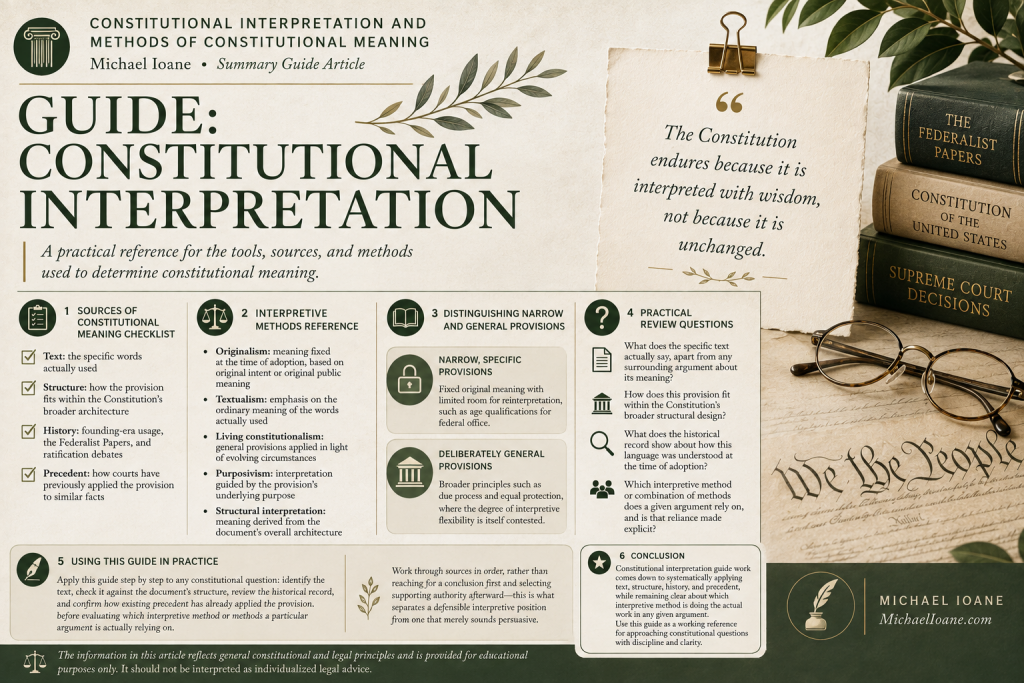
Sources of Constitutional Meaning Checklist
- Text: the specific words actually used in the relevant provision
- Structure: how the provision fits within the Constitution’s broader architecture and separation of powers
- History: founding-era usage, the Federalist Papers, and ratification debates
- Precedent: how courts have previously applied the provision to similar facts
Interpretive Methods Reference
- Originalism: meaning fixed at the time of adoption, based on original intent or original public meaning
- Textualism: emphasis on the ordinary meaning of the words actually used
- Living constitutionalism: general provisions applied in light of evolving circumstances
- Purposivism: interpretation guided by the provision’s underlying purpose
- Structural interpretation: meaning derived from the document’s overall architecture
Distinguishing Narrow and General Provisions
- Narrow, specific provisions: fixed original meaning with limited room for reinterpretation, such as age qualifications for federal office
- Deliberately general provisions: broader principles such as due process and equal protection, where the degree of interpretive flexibility is itself contested
Practical Review Questions
- What does the specific text actually say, apart from any surrounding argument about its meaning
- How does this provision fit within the Constitution’s broader structural design
- What does the historical record show about how this language was understood at the time of adoption
- Which interpretive method or combination of methods does a given argument rely on, and is that reliance made explicit
Using This Guide in Practice
This constitution interpretation guide works best applied to a specific clause or dispute directly: identify the text, check it against the document’s structure, review the relevant historical record, and confirm how existing precedent has already applied the provision, before evaluating which interpretive method or methods a particular argument is actually relying on.
Michael Ioane applies this same sequence whenever a constitutional question arises in the course of broader legal or structural analysis: working through sources in order, rather than reaching for a conclusion first and selecting supporting authority afterward, is what separates a defensible interpretive position from one that merely sounds persuasive.
Conclusion
Constitutional interpretation guide work comes down to systematically applying text, structure, history, and precedent, while remaining clear about which interpretive method is doing the actual work in any given argument. This guide is intended as a working reference for approaching a specific constitutional question with that same discipline and clarity.
The information in this article reflects general constitutional and legal principles and is provided for educational purposes only. It should not be interpreted as individualized legal advice.
Michael Ioane | MichaelIoane.com
Continue Learning with Michael Ioane
Build your understanding of asset protection and business planning with the Asset Protection Manual . Explore taxation and private trust planning in Boston Tea Party . Both books are available on Amazon.